Portfolio
Petroleum exploration
Irregular "5-spot"-like well pattern
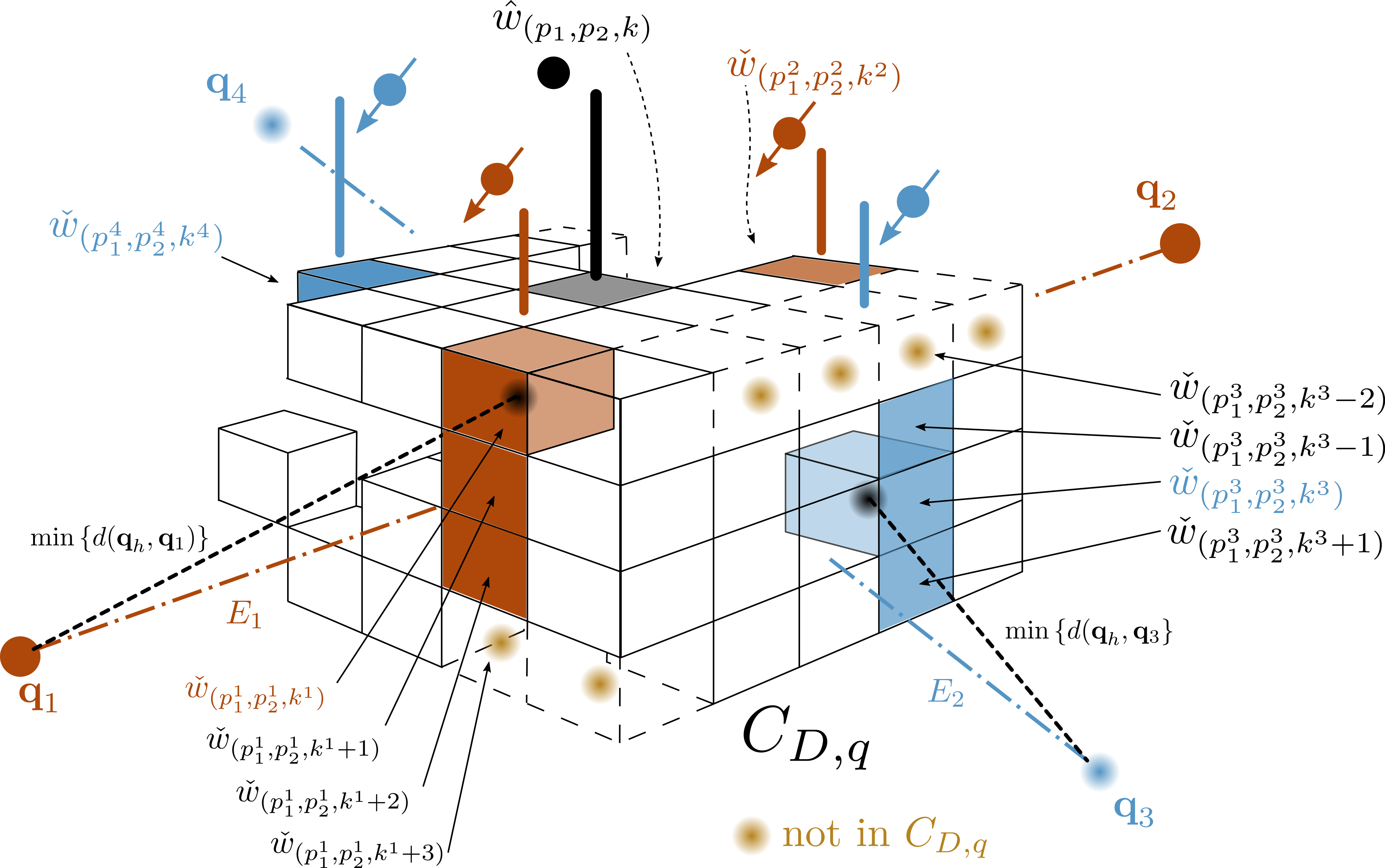
This scheme is an abstract conceptualization of a completion strategy for petroleum reservoirs ocurring at a small domain. An irregular "5-spot" well pattern is formed from injector wells (red and blue) that surround a single producer well (black). The perforation cells are obtained from "anchor points" determined after an elipsoid-fitting algorithm.
Computational mathematics
Particle trajectory abstraction
Collaboration with Gustavo Anjos
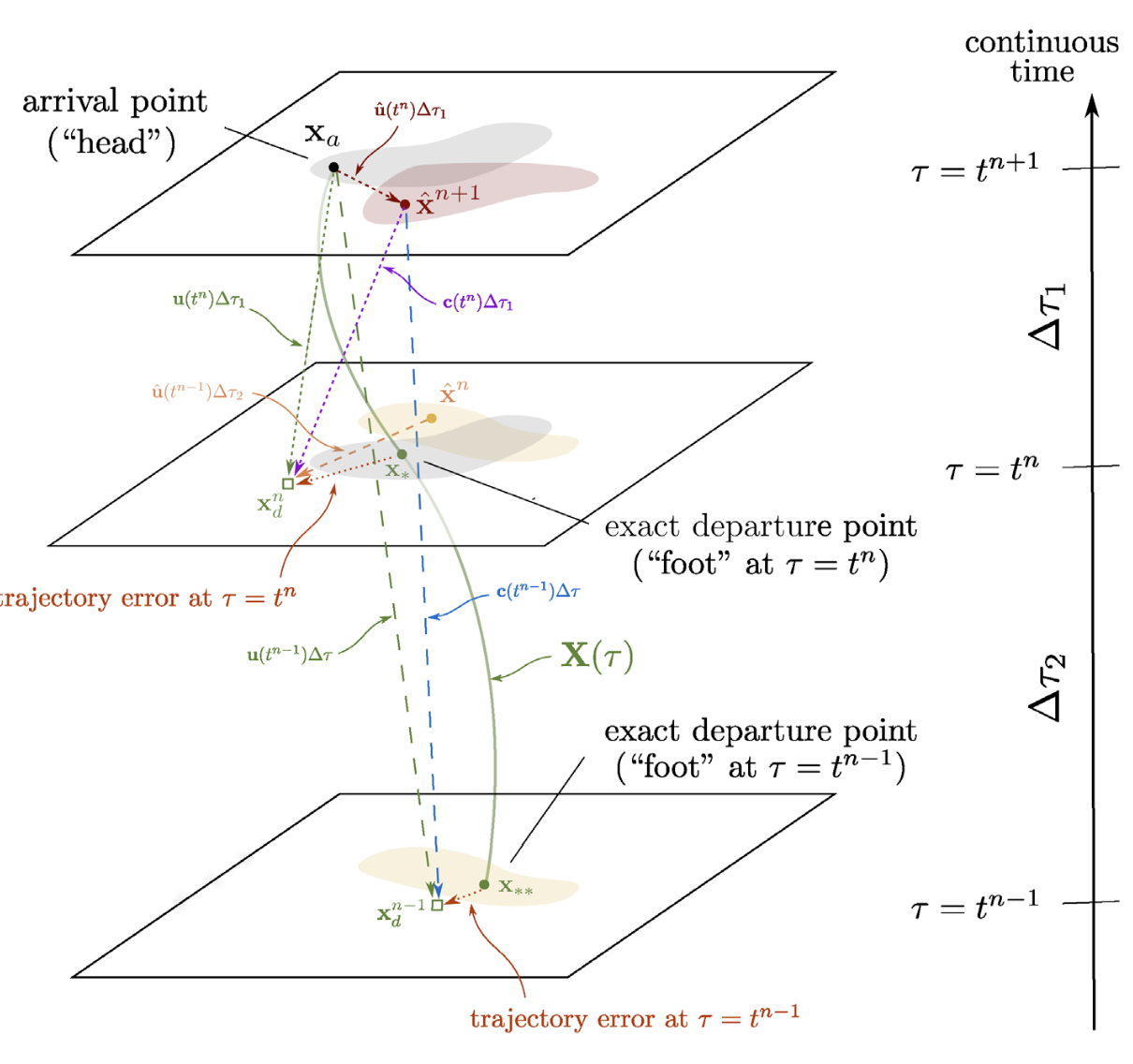
Space-time representation of a second-order semi-lagrangian scheme to describe fluid particles modeled in the context of the ALE/Finite Element method.
CFD
Evolution of a Lamb-Oseen vortex
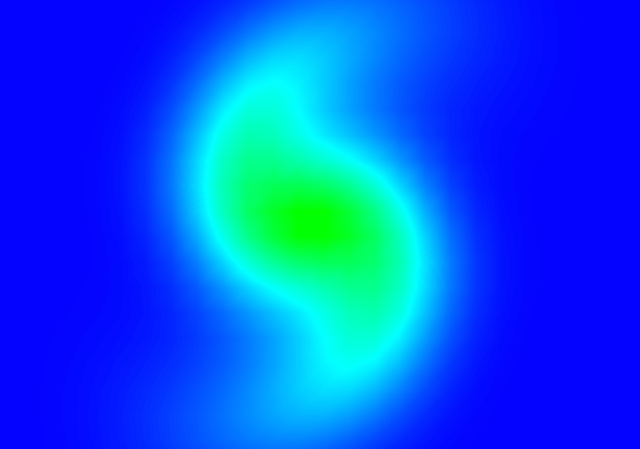
This image comes from a 2D simulation of the evolution of a Lamb-Oseen vortex transporting a scalar field. The vortex turns in the counterclockwise direction forming a pictorial letter "S".
Biomechanics
Cancellous bone / bone marrow
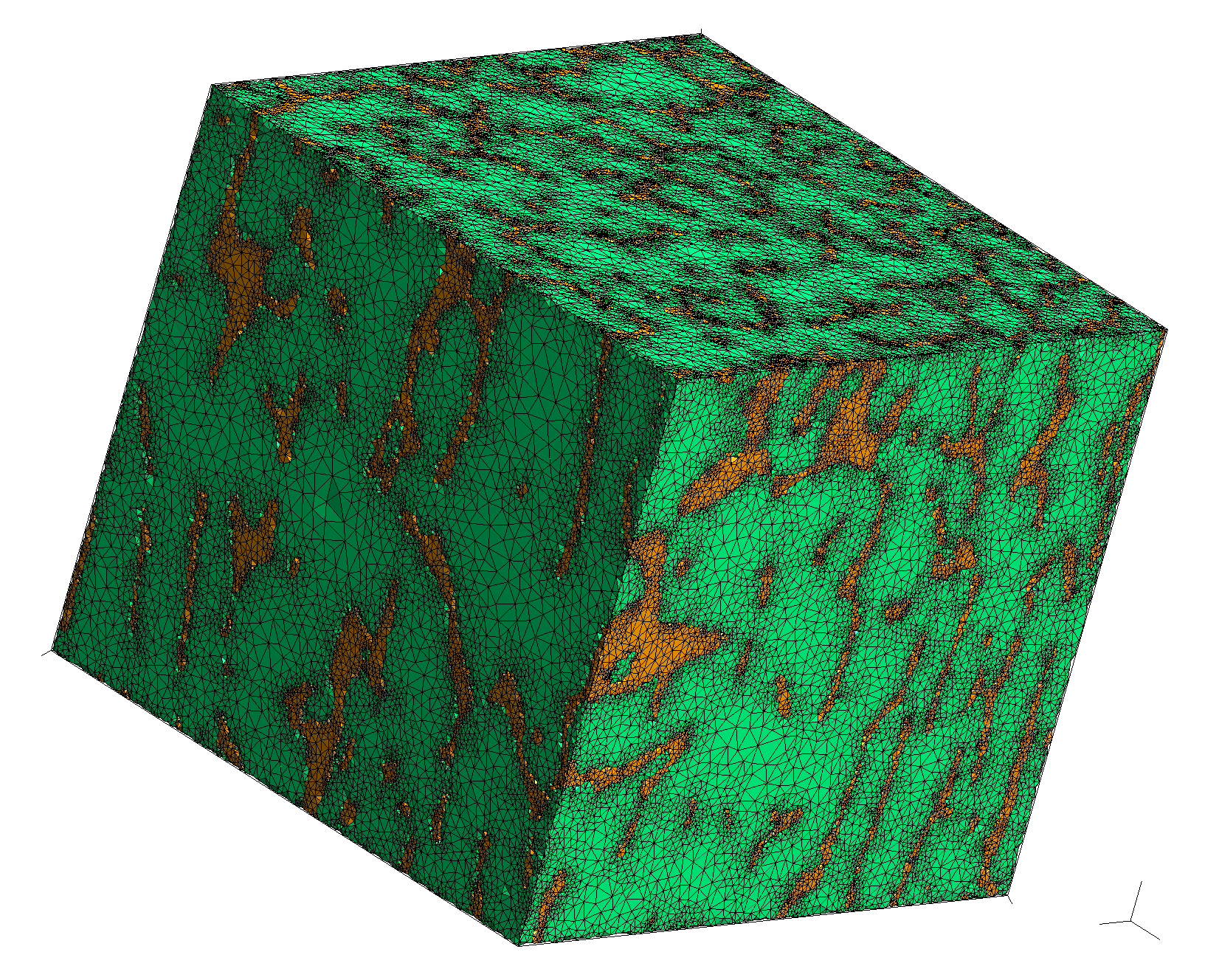
Finite element mesh of a Representative Elementary Volume (REV) of the porous region made up by cancellous bone/bone marrow interface of a healthy subject.
Bubble dynamics
Bubble cluster wake interaction
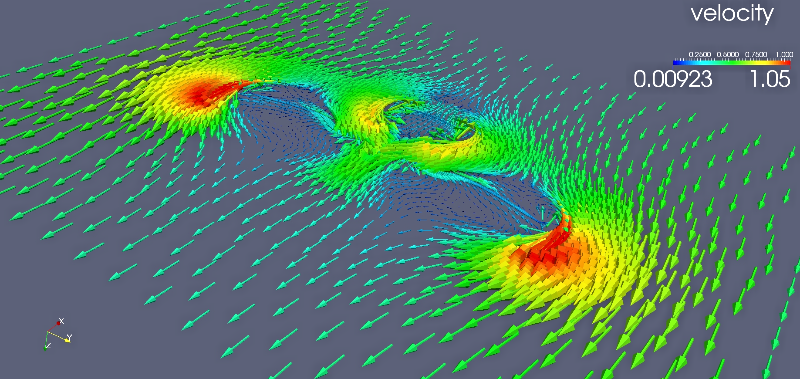
This simulation test considers a cluster of three bubbles arranged in arc traveling amidst a contrary liquid stream. The leading bubble goes above two trailing bubbles placed side-by-side. The wake interaction of the leading bubble over the others is observed in this velocity field. Regions of high velocity gradients appear at the outermost lateral tips due to interface deformation. Such configuration looks like the V-flight of birds, air streams, and shedding of wingtip vortices.
Electrochemistry
Centrifugal effects
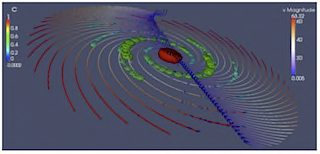
This snapshot is a frame of the simulation of a 3D simulation of a rotating disk flow displaying two fields overlapped. It simulates the dissolution in electrochemical cell experiment. The velocity field is observed by the streamlines varying from blue to red, descending from the top to the borders. Notably, the points of higher velocity occur at the brims of the circle in accordance to the centrifugal effects. On the other hand, the dissolution of the scalar field is represented by hoops which spread outward the central core.
CFD
Model of coalesced bubbles
Collaboration with Gustavo Anjos
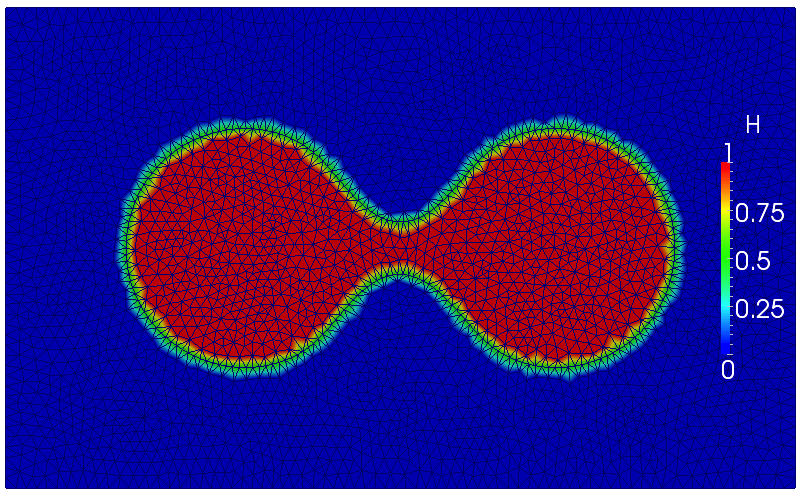
Here, the evolution of a two-phase model for two coalesced vapor bubbles immersed in a liquid continuum is studied. A Heaviside function marks the internal and external phases. The target is to perform verification steps for the numerical code as to its capability to deal with severe topological changes.
Carbon storage
Distance-to-trap functions for qualifying geological carbon storage sites
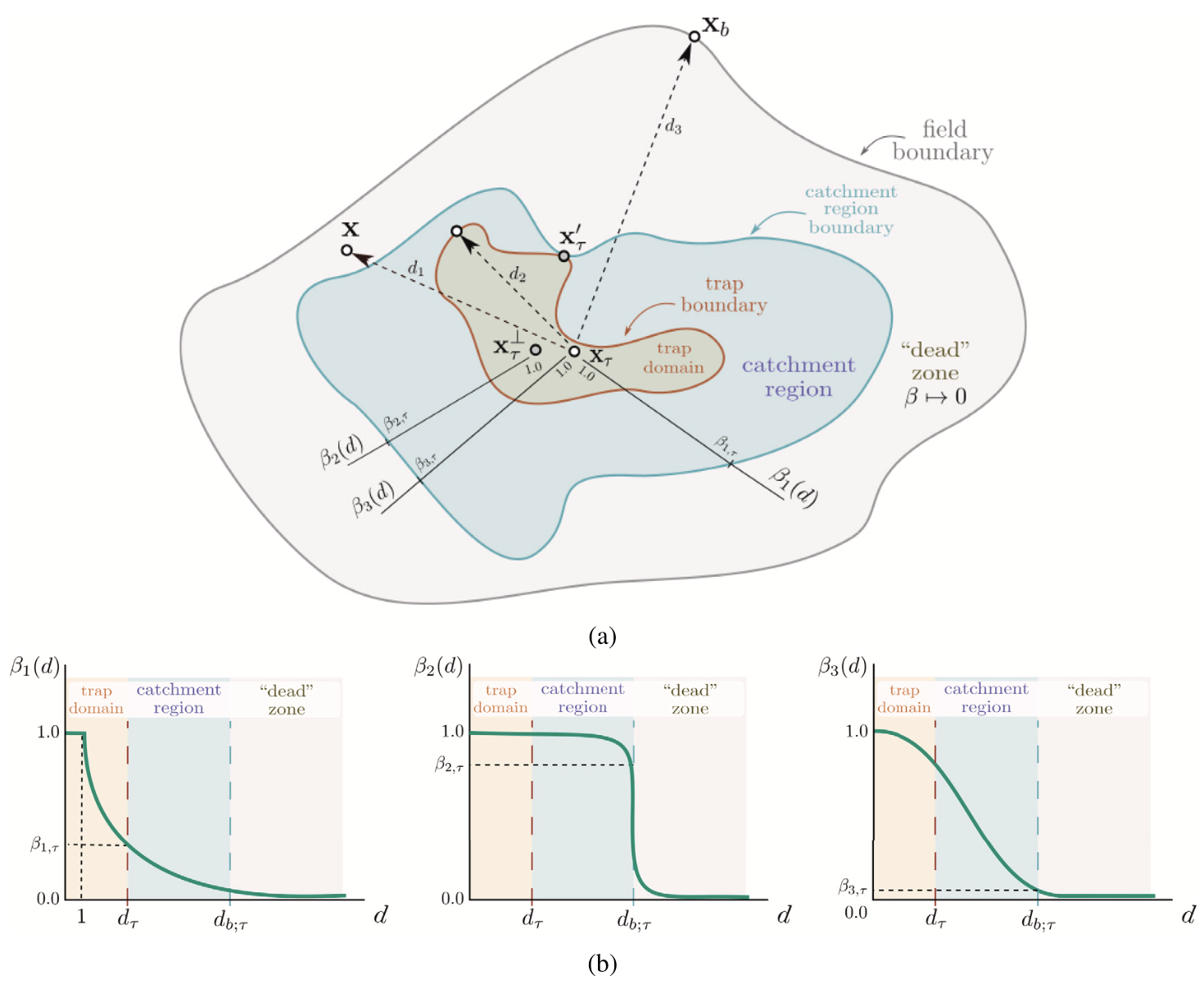
A distance-to-trap function is designed to locally weight the quality of a storage site. It provides an effective means of assigning relevance scores to areas surrounding a geological trap, making it particularly useful during the site screening and selection phases of geological carbon storage (GCS) protocols.
Graph theory
Well placement
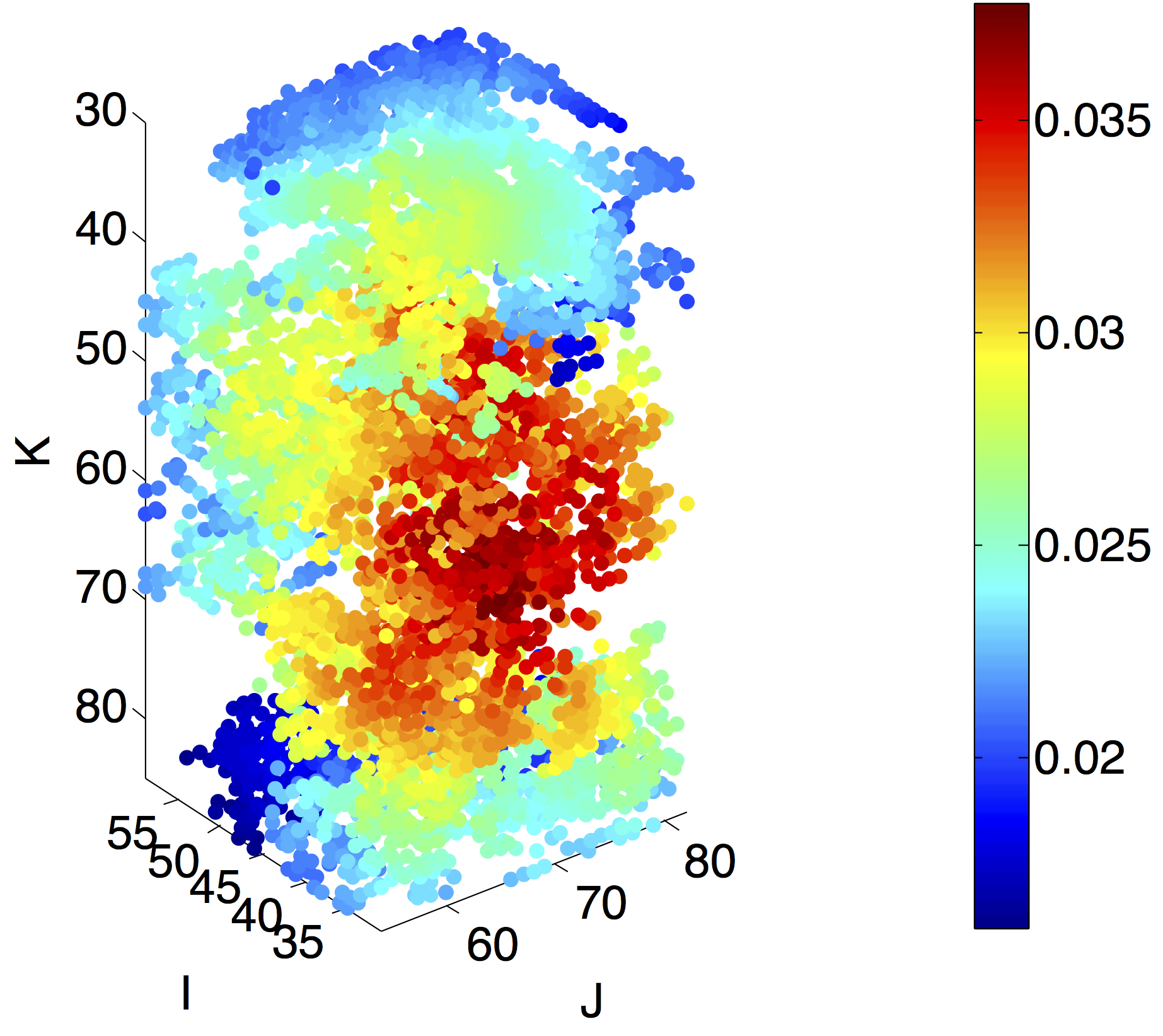
This figure is a "spot" of values that classify the local regions inside a petroleum reservoir as being of higher or lower consideration to implement well placement strategies for oil recovery based on the closeness centrality concept from graph theory. The red points make up a volume where the mathematical property stands out, thus suggesting that it is a region to be considered for production analysis.
Digital image processing
Pore matrix characterization
Partnership with Valdecir Santos
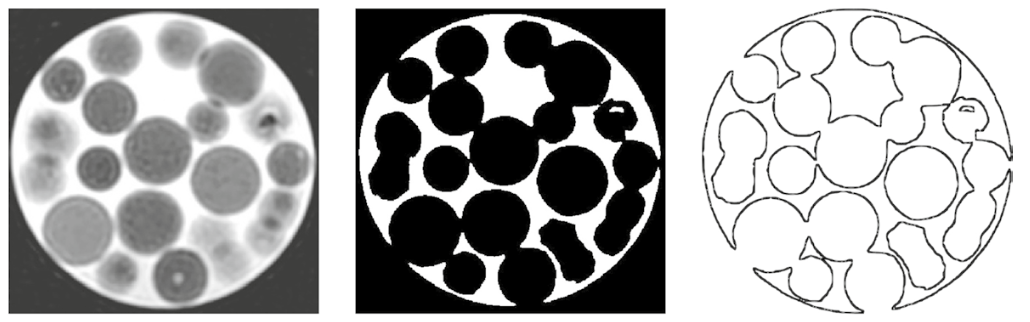
Cross section of a porous medium water-agar beads (experiment by Wu et al., 2016) and OpenCV-based edge extraction to compose the grain and pore regions, respectively.
Time series analysis
Carbon emission forecasting
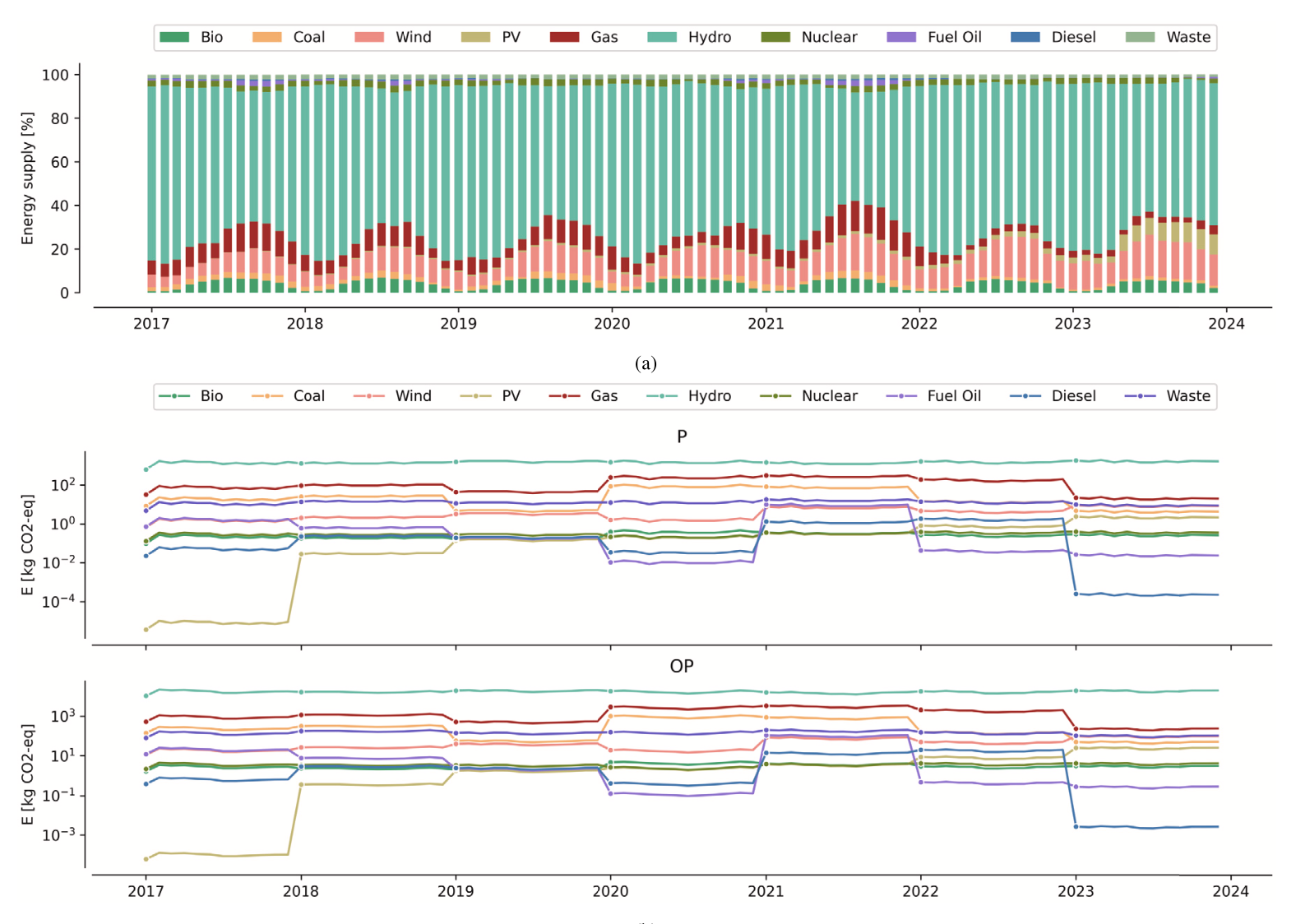
Peak (P) and out-of-peak (OP) time series of the electricity mix composition for energy supply at HULW/UFPB (top), and decomposed emissions per source (bottom) in kgCO2e units. SARIMA models were used to forecast the carbon emissions associated with electricity consumption at the university hospital for a net zero healthcare initiative.
Research software engineering
GAWPS module
With advisee Thiago Ney
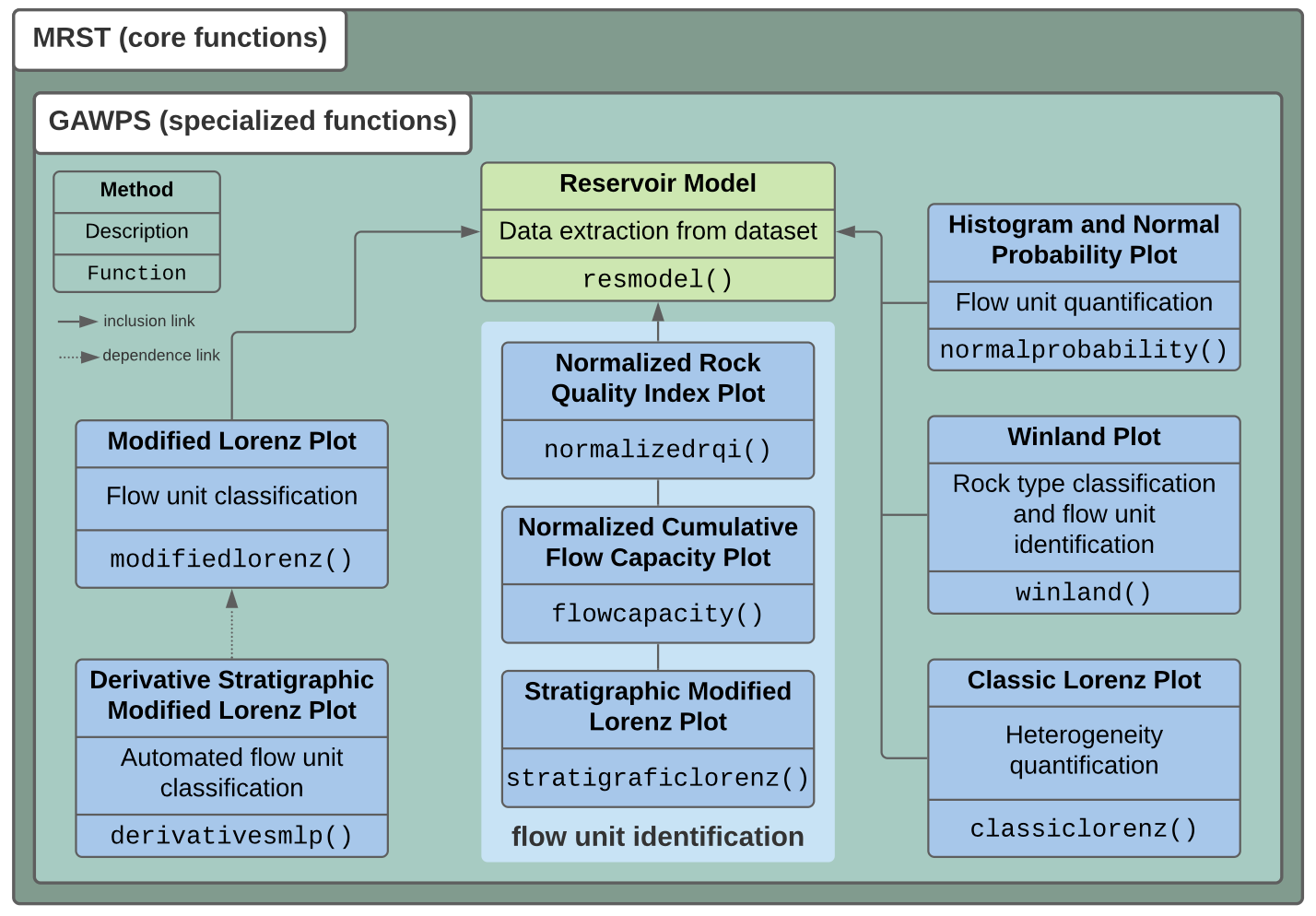
Overview of computational routines designed for GAWPS (Graphical Analysis for Well Placement Strategy), a plug-in module for the MRST software. The technical basis was published in AGER Journal (10.46690/ager.2022.01.04). GAWPS is useful for well profiling analysis and educational purposes.
Healthcare engineering control
Indoor comfort and air quality maintenance
With advisee Camilo Alves
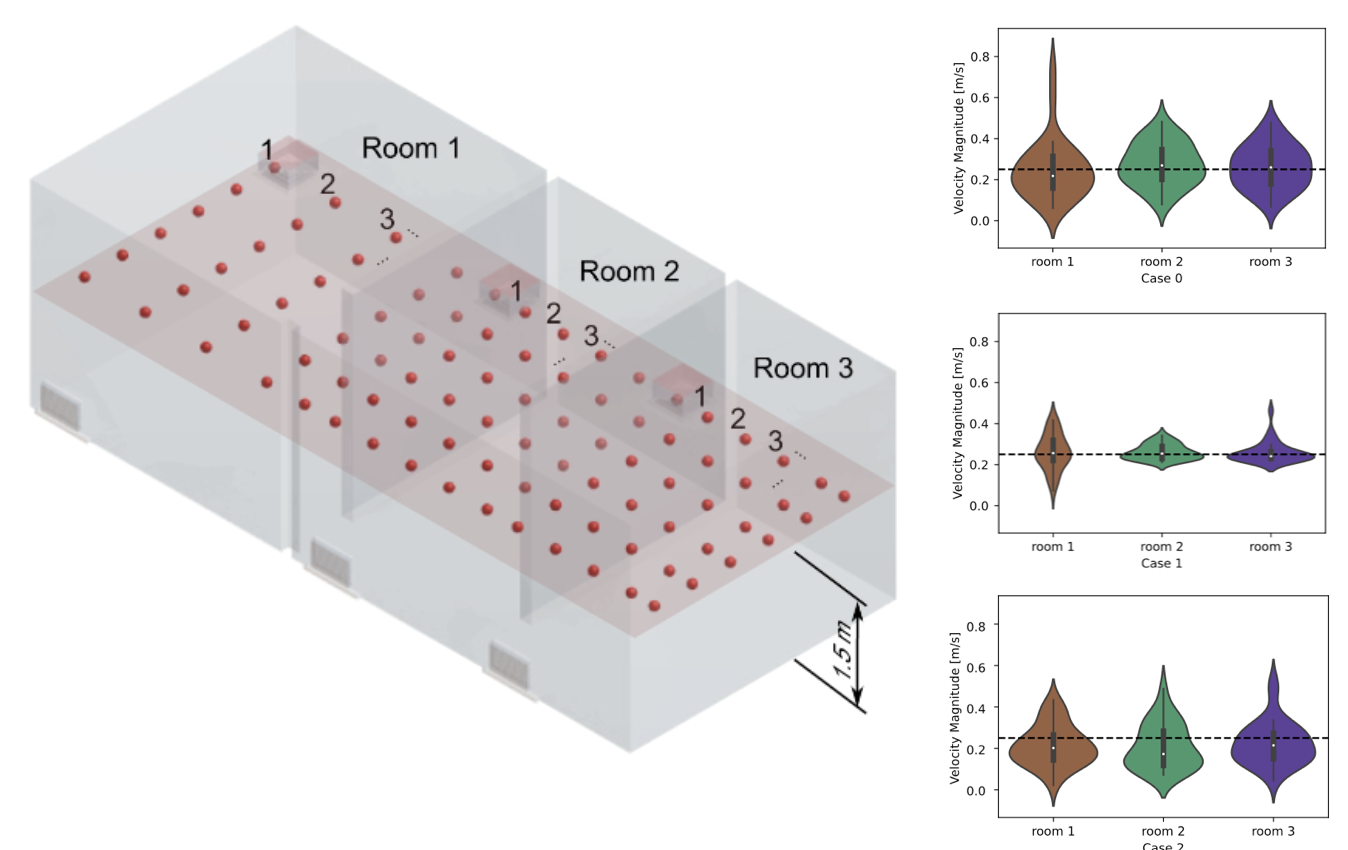
This figure illustrates a horizontal cross-section through the rooms of a healthcare unit. Uniformly spaced sampling points are distributed across each compartment to collect data at a height of 1.5 meters above the floor - the reference level required by Brazilian ANVISA regulations for evaluating the velocity field. Violin plots depict the distribution density of air velocity for three scenarios: no filtering, and the use of 1-inch and 2-inch MERV-13 filters integrated into the air-conditioning system as contaminant control measures.
Hydrodynamic Stability
Spiral-like disturbances
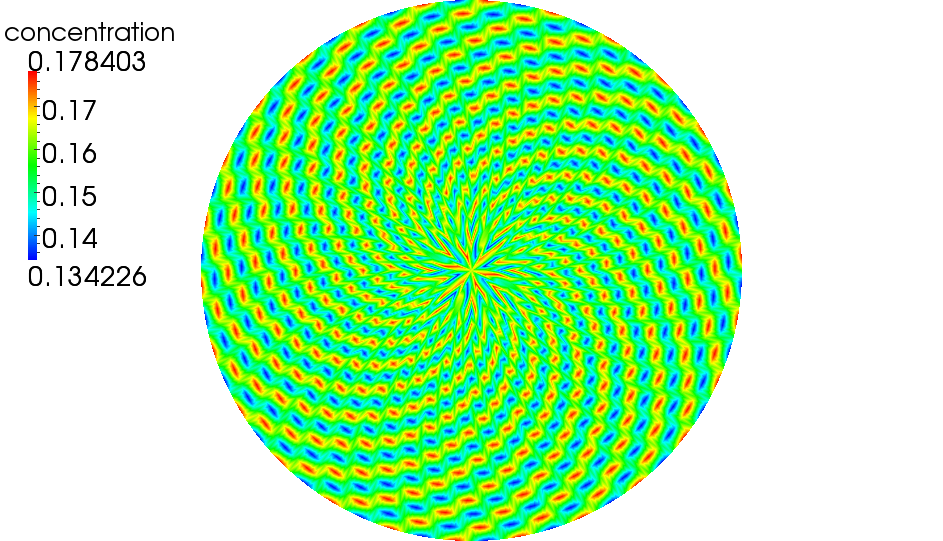
Plot of spiral-like disturbances of the scalar field of a chemical species taken after post-processing of a simulation of a rotating disk flow according to von Kármán's solution. The cut plane is perpendicular to the axial direction of a discoid geometry near to its lower limit where more intense centrifugal effects take place. With this finite element simulation, the effects of the dissolution of electrodes in electrochemical cells containing a H2SO4 solution were investigated.
Convolutional neural networks
Detection of hydrocarbon geologic "leads"
With Gabriel Leite
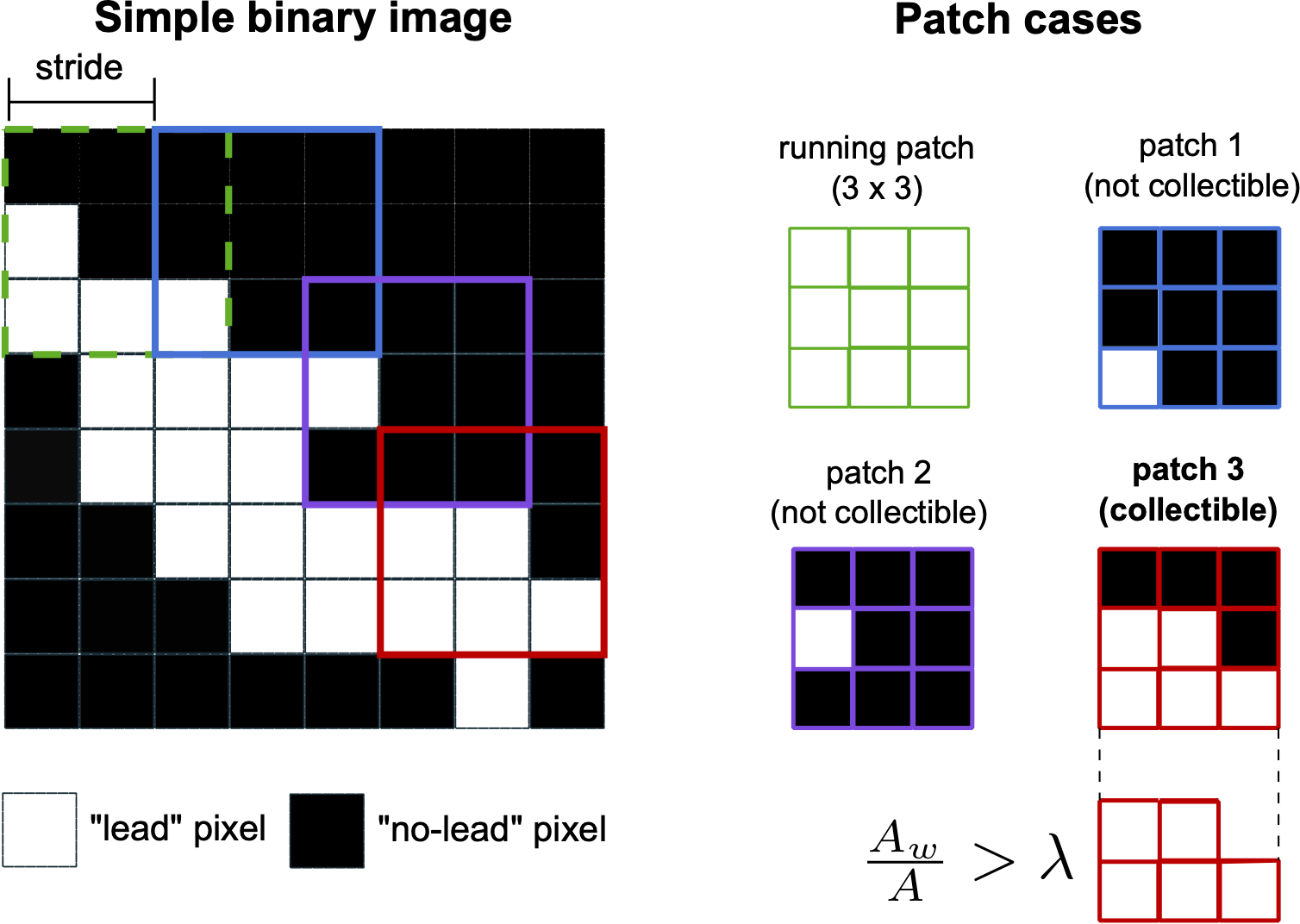
Process of patch generation from a simple binary image and a 3x3 patch model running with stride of 2. New image patches (subimages) are collectible to form a larger patch bank used for training of convolutional neural networks (CNNs) only if the area of white pixels (lead region) overlaps the running patch area by a proportion defined as "lead-pixel local area". In this example, two (blue and purple) of the three patches are non-collectible and one of them is collectible (red). Finally, the CNN is implemented for pattern recognition in seismic images.
Digital rock physics
Reservoir rock typing
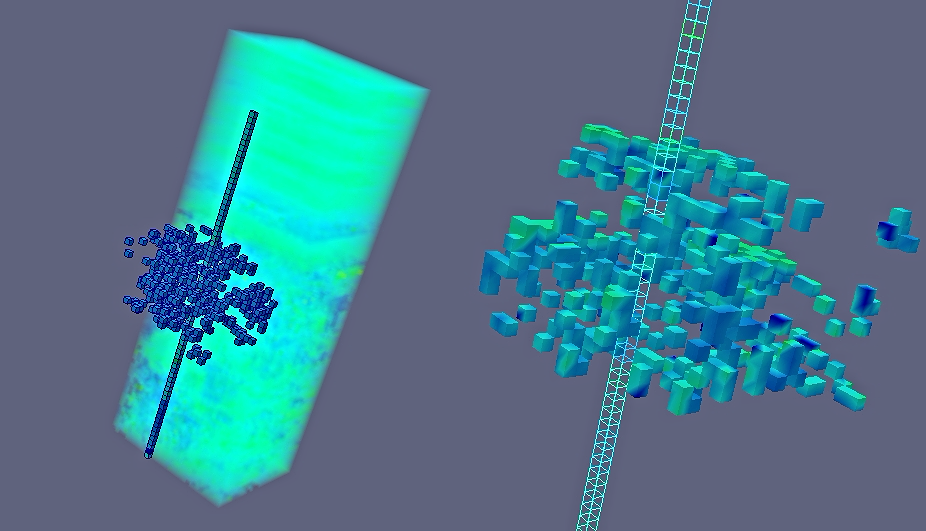
This is a 3D voxel representation of an oil well along with a neighbour set of discrete rocks. In the background, there is a portion of the reservoir field depicting its characteristics with the depth. (Based on the SPE10 model)
Two-phase flows
Rising bubble dynamics
Collaboration with Gustavo Anjos
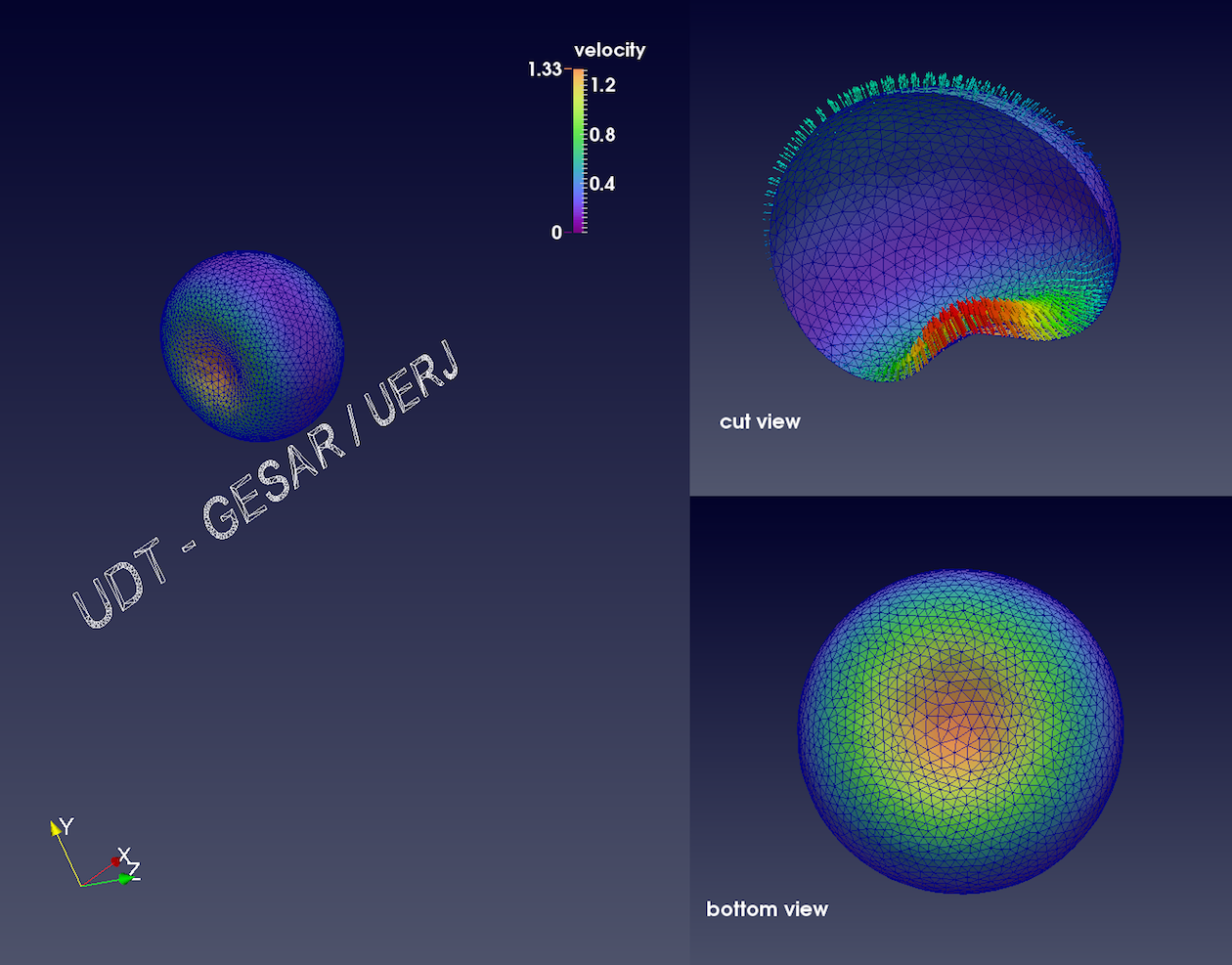
On this triplex screen, different views of a spherical air bubble model are observed. In this simulation, the bubble rises immersed into a sugar syrup solution by action of a pressure gradient from below, which pushes up the gas mass. The views single out a slight "dimple-like" deformation after some time of the upward movement.
Heat transfer
Serpentine
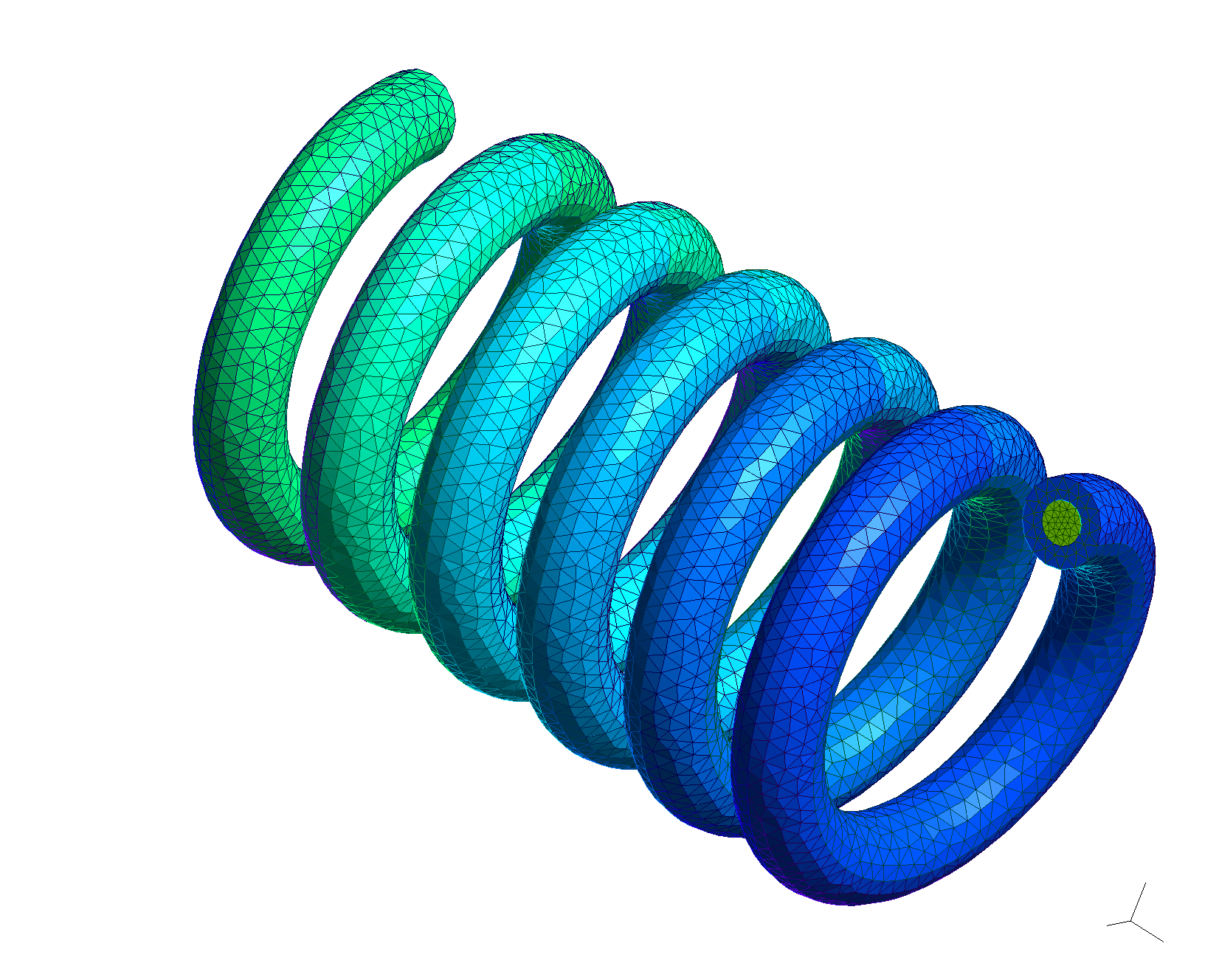
This is a tube coil model designed for heat exchange applications in which the fluid flows through the inner region of the tube while its outer region is subject to a heat flux. (Designed for Eng. Welington Coelho)
Reservoir modeling
Oil-water filled flow units
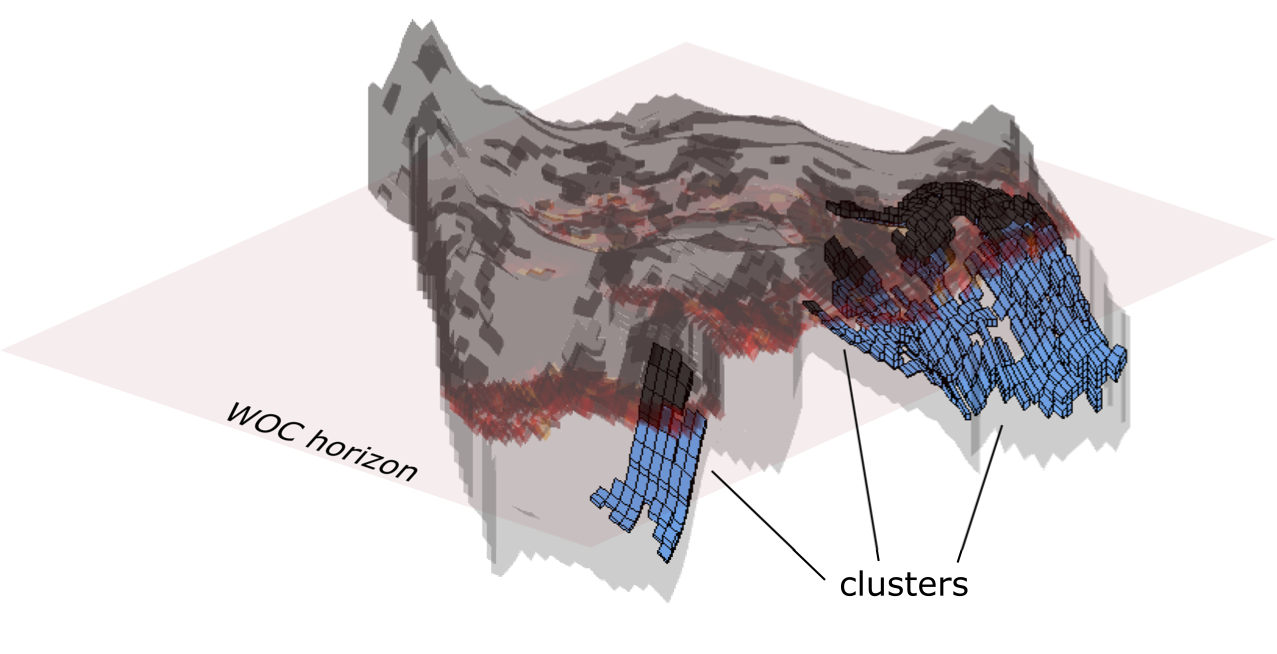
This figure shows partially oil-filled flow unit models nearby an idealized flat oil-water contact horizon. Here, flow units are identified as volumes of the reservoir rock endowed with good fluid flow properties that share oil- and water-saturated zones. In discrete terms, these volumes are formed by clusters of cells connected according to a Moore's neighborhood criterion.